
⭐ EARLY ORTHODONTICS · AGES 6–10
Big Confidence Starts With a Little First Step.
Wondering when your child should see an orthodontist? Start with a friendly visit to explore their developing smile, ask questions about growth and breathing habits, and understand their next steps.
Gallup, NMGrants, NMTuba City, AZ

Age 7
Recommended first checkup
WHY AN EARLY VISIT MATTERS
You don’t have to wait for every baby tooth to fall out.
Between ages 6 and 10, your child has a mix of baby teeth and permanent teeth, and their jaws are still growing. That makes it a useful time for an orthodontist to look at how everything is developing and spot concerns while they are still taking shape.
The American Association of Orthodontists recommends a first orthodontic checkup by age 7, or sooner if you notice a concern. For most kids, that visit simply gives you answers.
By 7
The age the AAO recommends for a child’s first orthodontic checkup.
Some kids
benefit from Phase One treatment.
Many kids
just need their growth monitored.
WHAT PARENTS MAY NOTICE
Noticed something? It’s a great reason to ask.
This isn’t a checklist for a diagnosis. These are common things parents bring up at a first visit.
-
Crowding
Teeth that look tight, overlapped, or short on space as new ones come in.
-
Teeth that don’t meet comfortably
Top and bottom teeth that seem to bite unevenly or out of line.
-
Chewing difficulties
Trouble biting into foods or chewing that seems uncomfortable.
-
Thumb or finger habits
A habit that has continued past the toddler years.anager
-
Jaw development
Questions about how the upper or lower jaw seems to be growing.

GROWTH, BREATHING & THE BIGGER PICTURE
Looking Beyond Straight Teeth.
Your child’s development involves more than the appearance of their smile. Tell us about breathing habits or sleep concerns you’ve noticed. We can discuss findings related to their teeth and jaws and whether evaluation by their pediatrician, ENT, or sleep specialist may be appropriate.
Worth mentioning
Persistent mouth breathing, habitual snoring, or restless sleep. These are also worth raising with your child’s pediatrician.
Our role
Assessing your child’s teeth, bite, and jaw development, and coordinating with their other providers when appropriate.
WHAT PHASE ONE TREATMENT MEANS
A head start for specific concerns, when it’s needed.
Phase One is an initial stage of orthodontic treatment for selected problems that are easier to guide while a child is still growing. It usually lasts around a year. It isn’t comprehensive treatment, so many kids have a second phase later to finish straightening their permanent teeth.
Expander
Gently creates room in a narrow upper jaw while it’s still growing.
Limited braces
Braces on a few teeth to address a specific concern, like a crossbite.
Other appliances
Chosen for your child’s needs, such as support for breaking a habit.
An early evaluation does not mean your child needs early treatment.

The first visit
What to expect, step by step.
1
Introductions
Meet Dr. Morris and the team and get comfortable in our star-filled office.
2
Your questions
Tell us what you’ve noticed, including any breathing or sleep habits.
3
A gentle exam
Dr. Morris looks at your child’s teeth, bite, and jaw development.
4
Records, if needed
Photos or X-rays are taken only when clinically indicated.
5
Next steps
You leave with a clear explanation, whether that’s treatment or a future checkup.

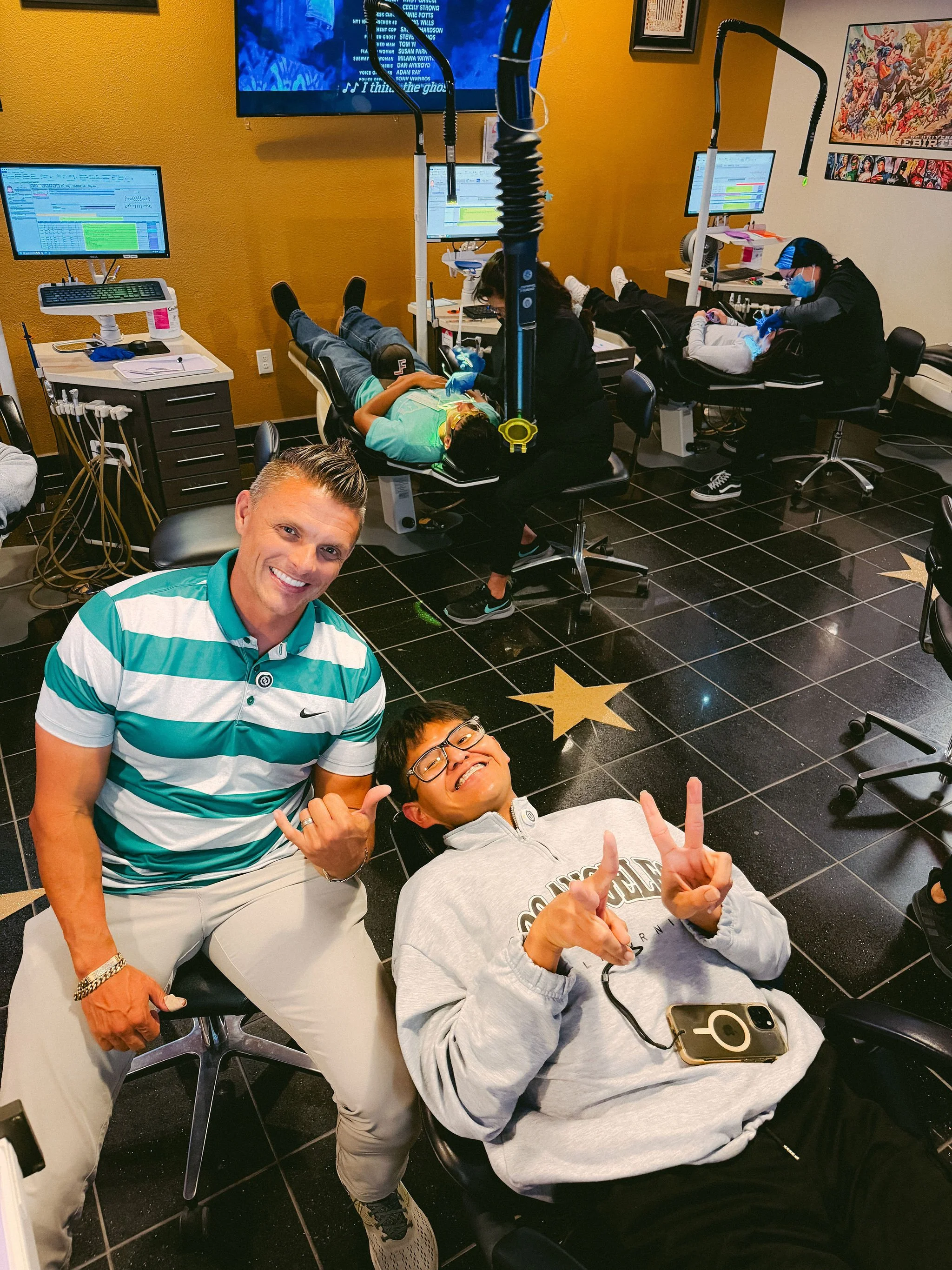

MEET THE DOCTOR
Dr. Morris
A University of Utah honors graduate, Dr. Morris finished in the top 5% of his class at Creighton Dental School and completed his orthodontic training at ATSU in Phoenix. He chose orthodontics to help young people feel confident, and he keeps the office fun so kids actually look forward to their visits.
“I love seeing my patient’s self-confidence emerge as their smiles progress.”
Dr. Morris · Statement on early evaluation pending doctor approval
FAQ
Questions parents ask us.
-
While baby and permanent teeth are both present and the jaws are still growing, it’s easier to see how a smile is developing. An early look lets us spot concerns sooner and, for most kids, simply confirms that things are on track.
-
No. Many children only need their growth monitored with periodic checkups. Phase One is recommended only for specific developing problems that benefit from earlier care.
-
Phase One addresses selected problems while a child is still growing, often over about a year. Later, comprehensive treatment aligns the permanent teeth once they have come in.
-
Often, yes. Phase One isn’t comprehensive treatment, so a second phase may still be needed to straighten the permanent teeth. We’ll explain what to expect for your child.
-
It depends on the cause. We can assess your child’s teeth, bite, and jaw development and share what we find. Breathing and sleep concerns may need evaluation by your child’s pediatrician, an ENT, or a sleep specialist.
-
Call our office at 505.979.5600 and our team will share current evaluation details for your preferred location.
★
Their First Visit Can Be the Start of Something Great.
Send us a quick note and our team will reach out to find a time. Prefer to talk? Give us a call.
Gallup- 1213 US 491, Suite C, Gallup, NM
Grants- 920 Lobo Canyon Rd, Grants, NM
Tuba City- 5 S Main St Suite C, Tuba City, AZ